Duplicate handling
In the reported repeat-submission test, the saved decision was reused without another CRM or Slack action.
Controlled AI lead triage
This workflow connects free-text intake to routing rules, CRM records, and review alerts—exploring how AI interpretation can reduce avoidable manual sorting.
The intake problem
When a person must interpret every free-text request, qualified prospects wait and unclear requests pile up. The safe question is not “how do we automate everything?” It is “where can AI help, and where must a person remain in control?”
Adapt the pattern to your intake fields and routing rules through a scoped pilot.
The controlled approach
A form webhook receives one logical submission.
It extracts useful signals from the free text.
Evidence and business policy decide what happens next.
External actions consume only the saved result.
AI extracts signals; routing rules select the next action from the saved decision.
Evidence-backed interpretation, with deterministic policy retaining final authority.
What was demonstrated
The reported synthetic evaluation used evidence-backed signals to route valid enquiries that literal keyword rules could not classify.
Built with OpenAI, n8n, HubSpot, and Slack. Other stacks can be considered against the workflow's integration and control requirements.
Inspect the integration evidence
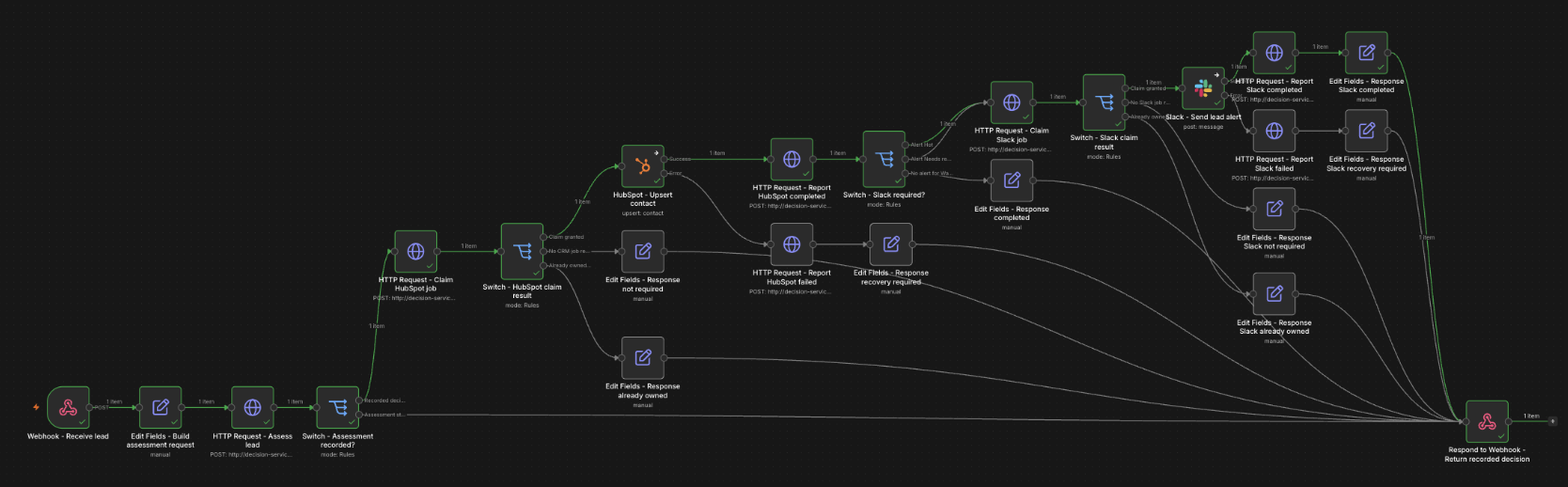
In the reported repeat-submission test, the saved decision was reused without another CRM or Slack action.
In the reported Slack-failure test, the workflow retained the original decision and recorded the failure state.
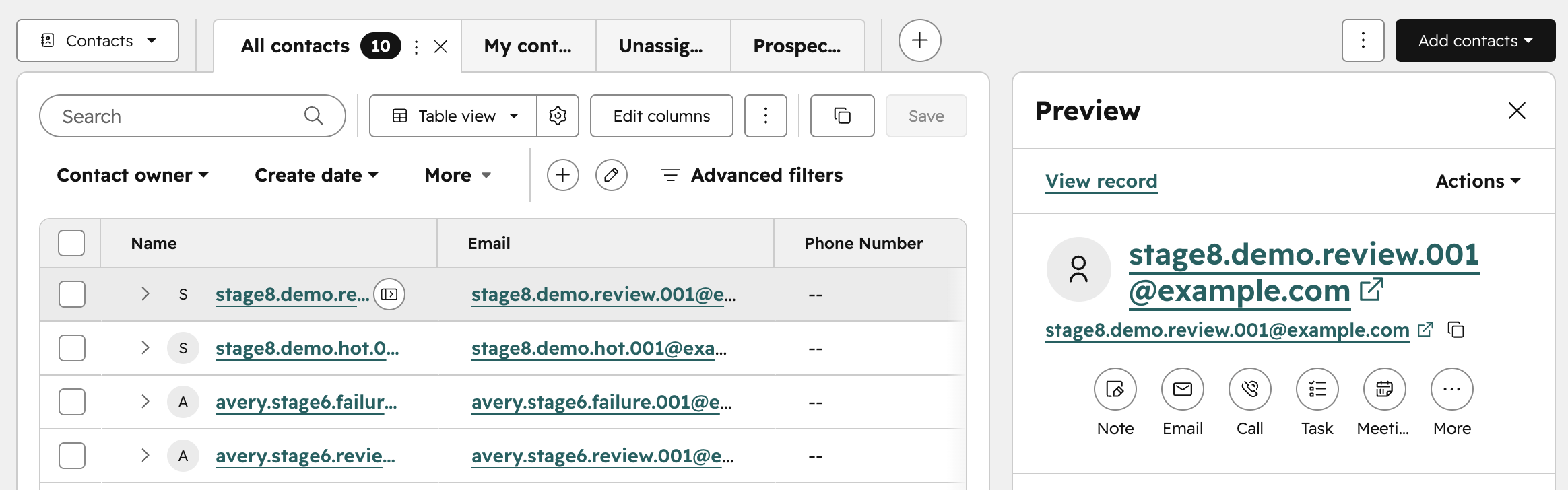
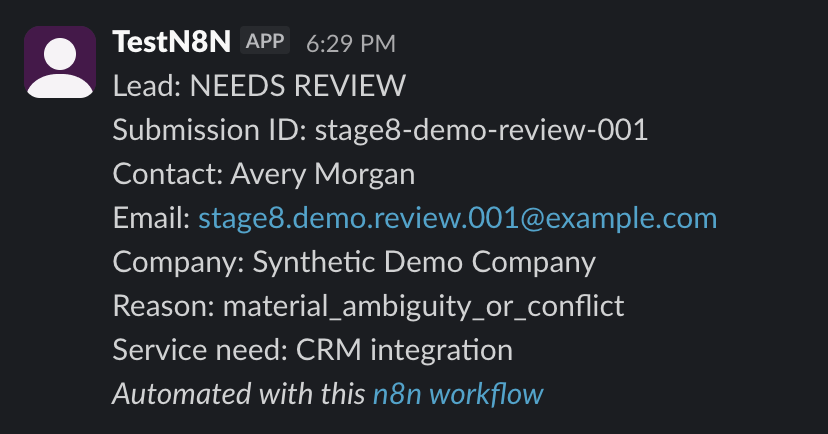
The illustrated Needs Review submission appears in both the CRM and the matching human-review alert.
The next conversation
We can first determine whether AI, better rules, or a better form is the right answer—then run a bounded pilot with a baseline, controlled implementation, measurement, and a scale/revise/stop decision.
Tell me your intake problem